DIMO Mobile
Shaping a crypto-native network into a daily utility.

Role
Product Strategy, UX Architecture, Systems Design, User Research, and Cross-Functional Alignment
Platforms
IOS & Android
Timeline
Sep 2024— Jul 2025
Category
Automotive, Blockchain identity, Consumer software
DIMO is an open connected-car platform that gives drivers real-time access to vehicle data through plug-in devices and OEM integrations. Drivers can track performance, monitor vehicle health, and securely share data with third-party apps while maintaining ownership.
Operating at the intersection of automotive infrastructure, blockchain identity, and consumer software, DIMO includes a driver-facing mobile app and a developer ecosystem built on vehicle data.
I joined in September 2024 as Head of Design and the company’s first full-time product designer, leading mobile experience and its integration with underlying blockchain systems. This case study covers the evolution that expanded DIMO beyond its crypto-native roots.
The inflection point
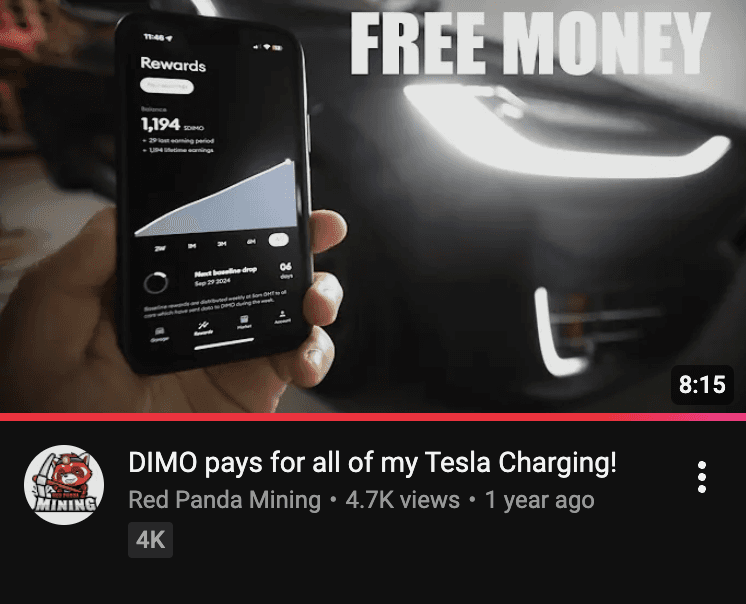
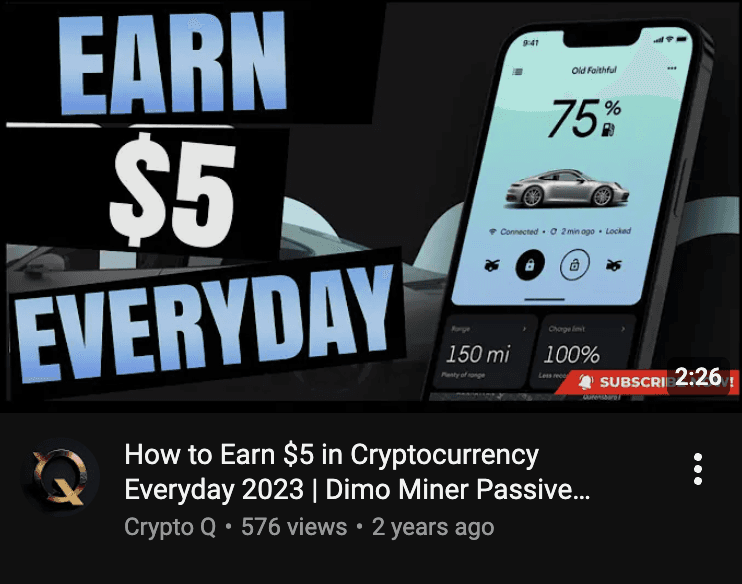
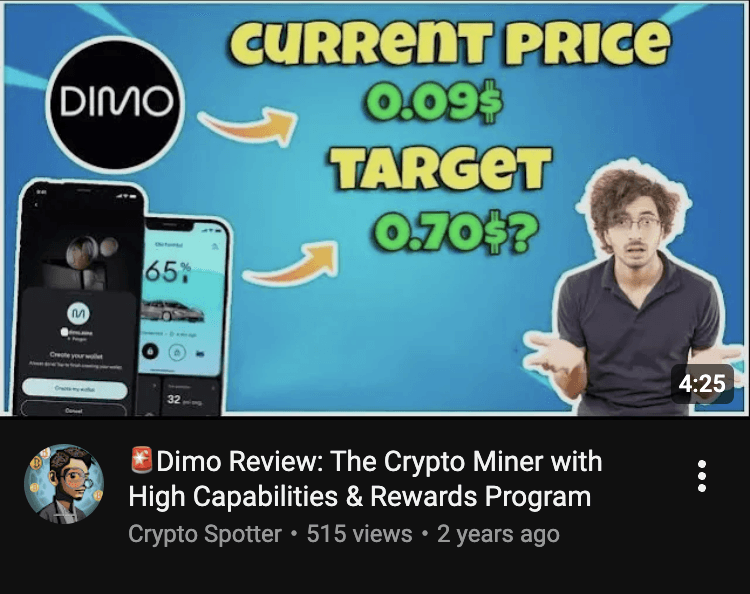
When I joined DIMO in late 2024, the company had traction but was at a strategic crossroads. It was widely known in crypto communities as a way to earn tokens by connecting your car. Weekly engagement spiked on reward distribution days while daily usage remained low. Most users opened the app to check earnings, not to understand their vehicle.
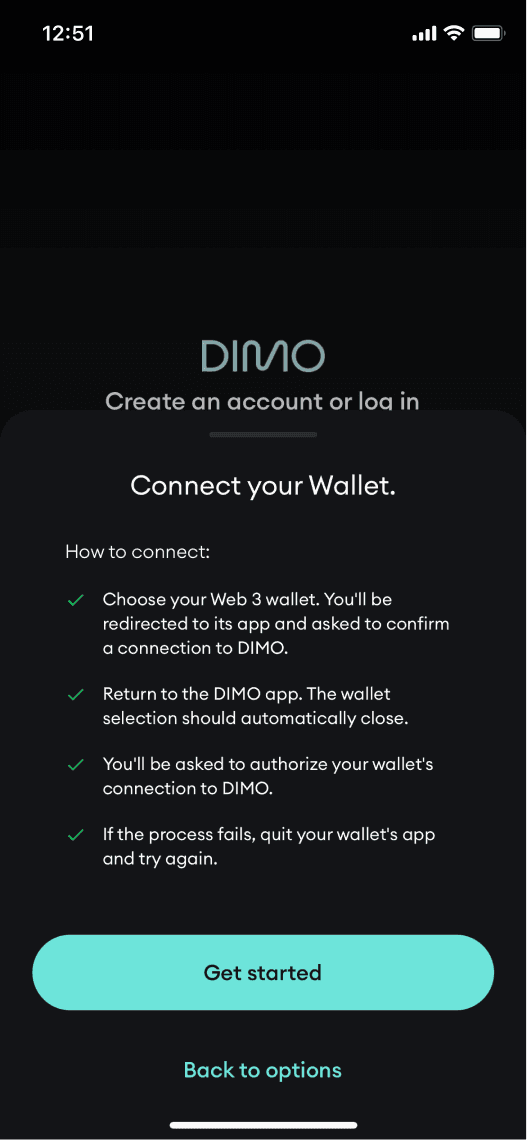
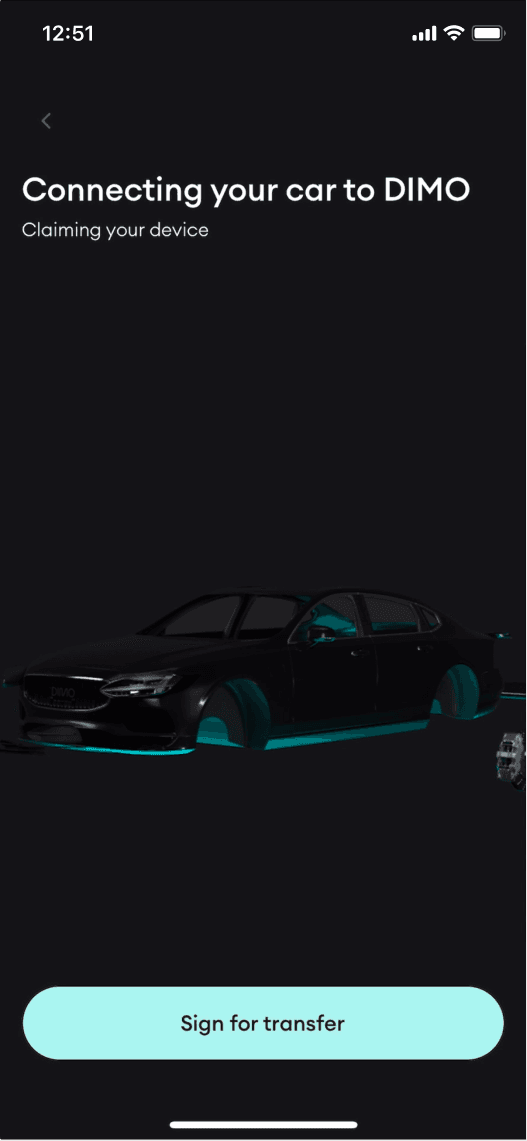
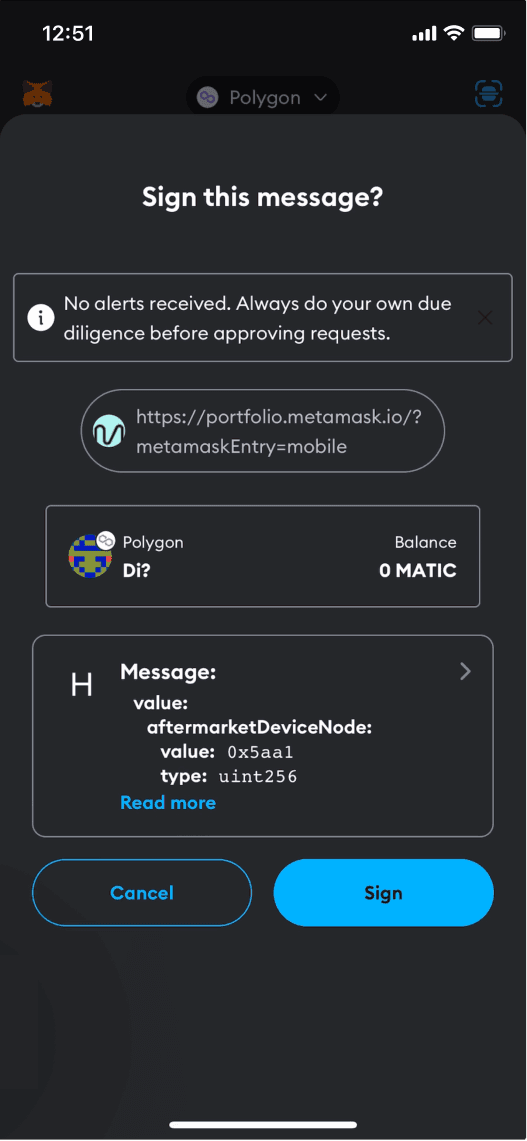
Onboarding required external wallets, NFT minting, transaction signing, and gas fees. Acceptable for crypto-native users, intimidating for mainstream drivers.
DIMO showed product-market fit, but for a narrow audience. To scale, it needed to evolve from a crypto incentive tool into a daily driver platform.









Strategic thesis
Expanding beyond early adopters required two coordinated shifts.
Everything in this case supports those two shifts.
Making blockchain invisible
Revamping onboarding
DIMO’s original account system required external wallets and on-chain minting. While it preserved ownership and transparency, it introduced friction: multiple account states, transaction signing, and unclear identity mapping. For early adopters, this was tolerated. For mainstream drivers, it was a growth ceiling.
The goal was to redesign onboarding around a familiar mobile account flow while preserving the underlying blockchain architecture. We introduced a wallet-as-a-service model that allowed users to sign up with email or Apple ID, sponsored required gas fees, and maintained secure identity mapping between legacy and new accounts.
before
before
before
before
before
before
before
before
before
before
before
before
before
before
before
before
before
before
before
before
before
before
before
before
before
before
before
before
before
before
before
before
before
before
before
before
before
before
before
before
before
before
before
before
before
before
before
before
before
before
before
before
before
before
before
before
before
before
before
before
before
before
before
before
before
before
before
before
before
before
before
before
before
before
before
before
before
before
before
before
before
before
before
before
before
before
before
before
before
before
before
before
before
before
before
before
before
before
before
before
before
before
before
before
before
before
before
before
before
before
before
before
before
before
before
before
before
before
before
before
before
before
before
before
before
before
before
before
before
before
before
before
before
before
before
before
before
before
before
before
before
before
before
before
before
before
before
before
before
before
before
before
before
before
before
before
before
before
before
before
before
before
before
before
before
before
before
before
before
before
before
before
before
before
before
before
before
before
before
before
before
before
before
before
before
before
before
before
before
before
before
before
before
before
before
before
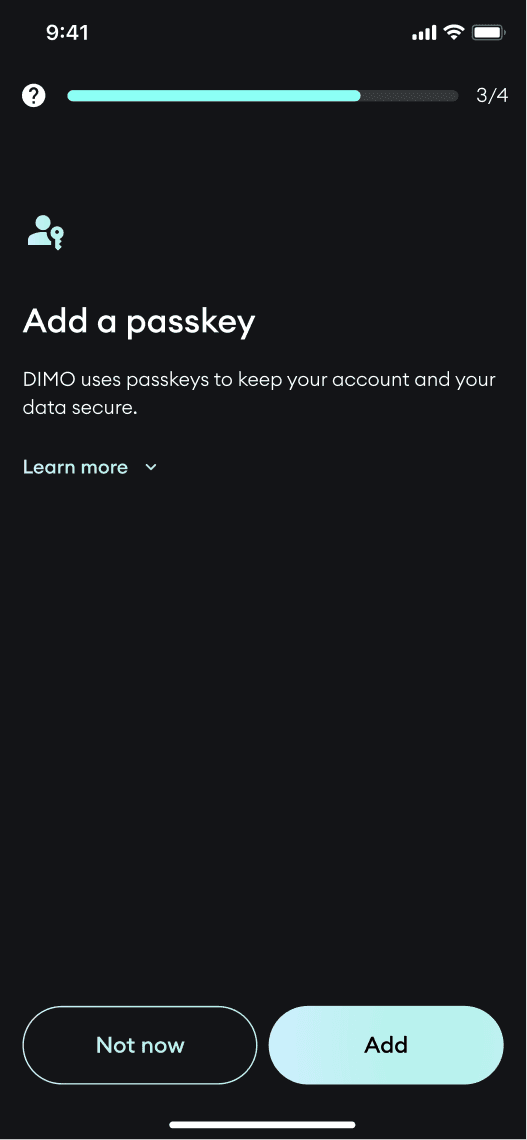
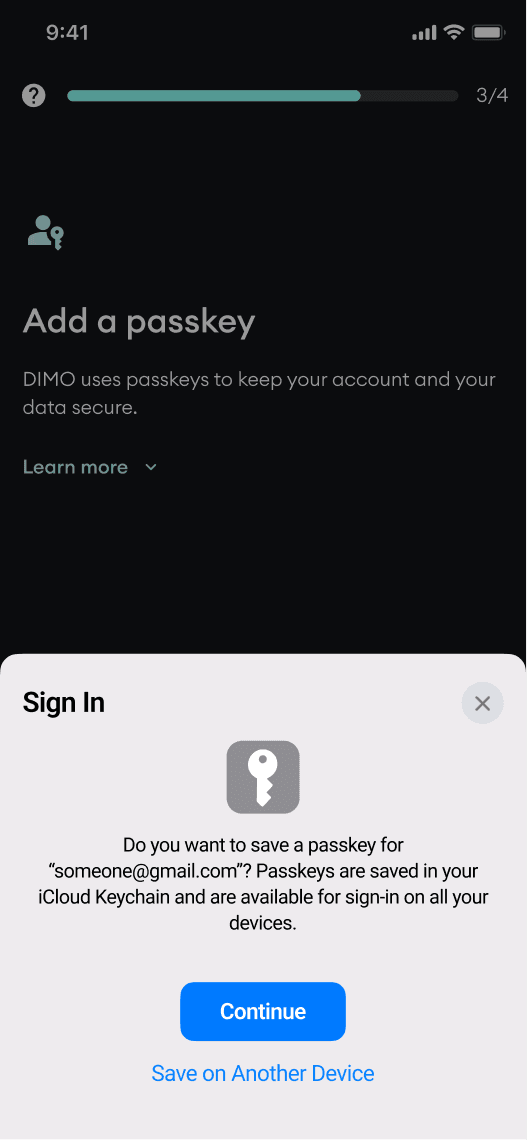
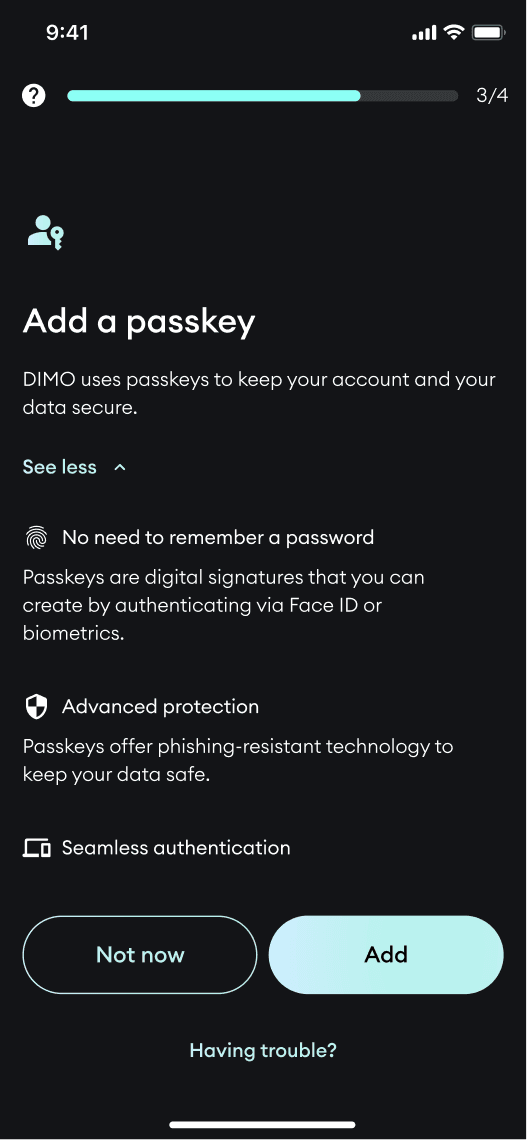
Migrating legacy accounts
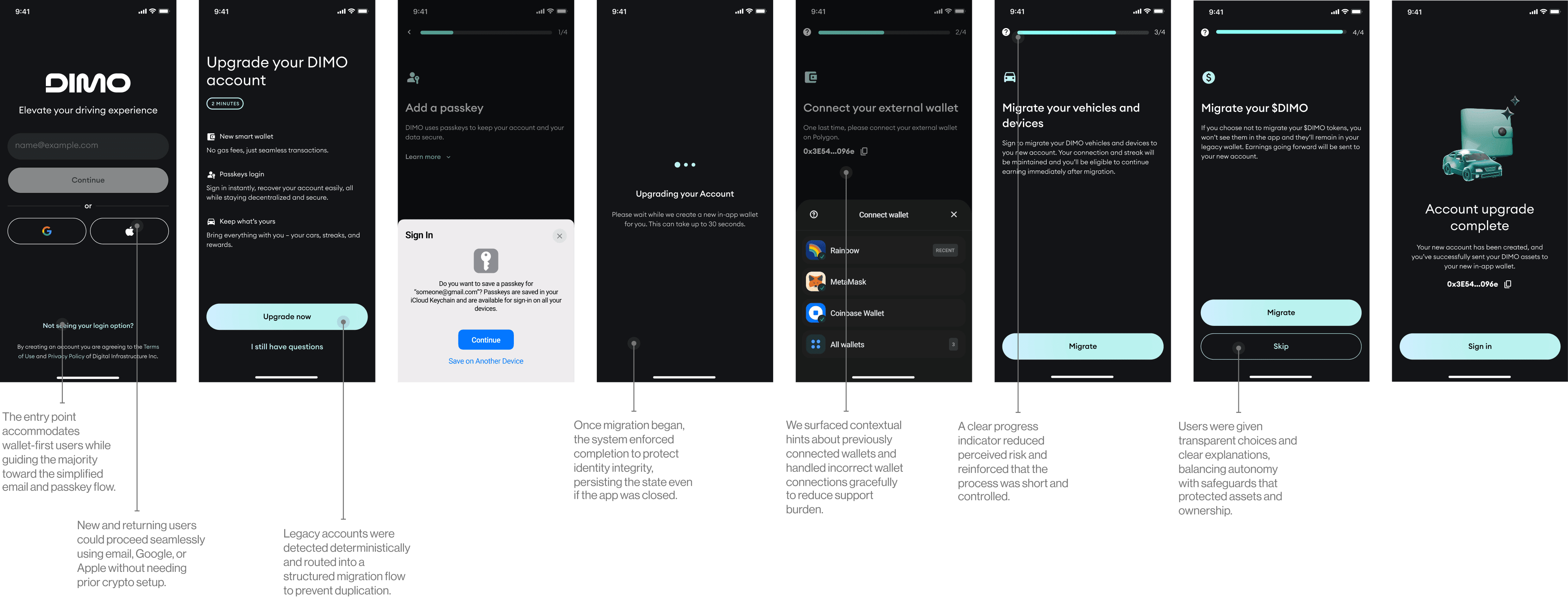
This was not an onboarding redesign. It was a high-risk identity migration touching ownership and trust.
Tens of thousands of users already had minted devices, NFT vehicles, token balances, and connected wallets. A flawed migration could create duplicate identities, broken ownership mapping, or asset loss.
We reconciled two account models: externally managed wallets and internally abstracted email identities. I partnered with engineering to define migration states, edge cases, and guardrails before designing screens. Principles were clear: no silent asset movement, no irreversible actions without confirmation, no unnecessary technical language. Gas fees for required transfers were sponsored to remove friction.
Results

This shift required full product alignment. We rewrote account language across the app and coordinated with marketing to reinforce a simple narrative: easier access, same ownership.
Post-launch, we monitored migration metrics daily and partnered with support to resolve identity edge cases quickly.
More importantly, we executed a structural shift in identity architecture without eroding user trust, enabling mainstream growth while preserving decentralization. Onboarding friction was no longer the primary constraint on scale.
60K accounts migrated in a month
Sign up 10 min to 90 sec
Sign in 2 min to 11 seconds
Car connection and claiming devices under 1 min
From rewards to daily value
Reframing engagement
Removing onboarding friction addressed growth, but it did not solve engagement. Usage still clustered around weekly reward distribution. The product was being used transactionally, not habitually.
What would make DIMO valuable even if rewards disappeared?
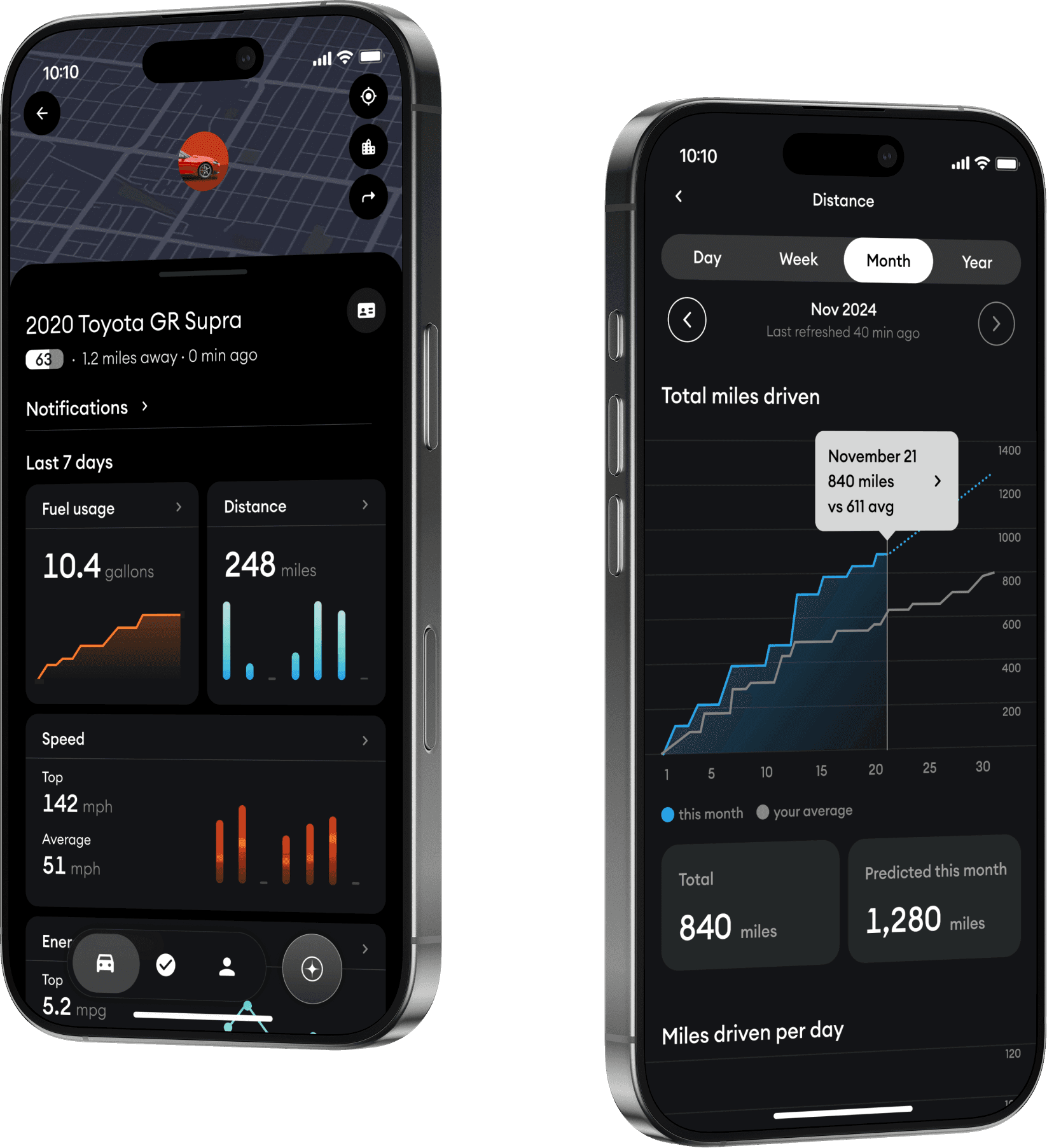
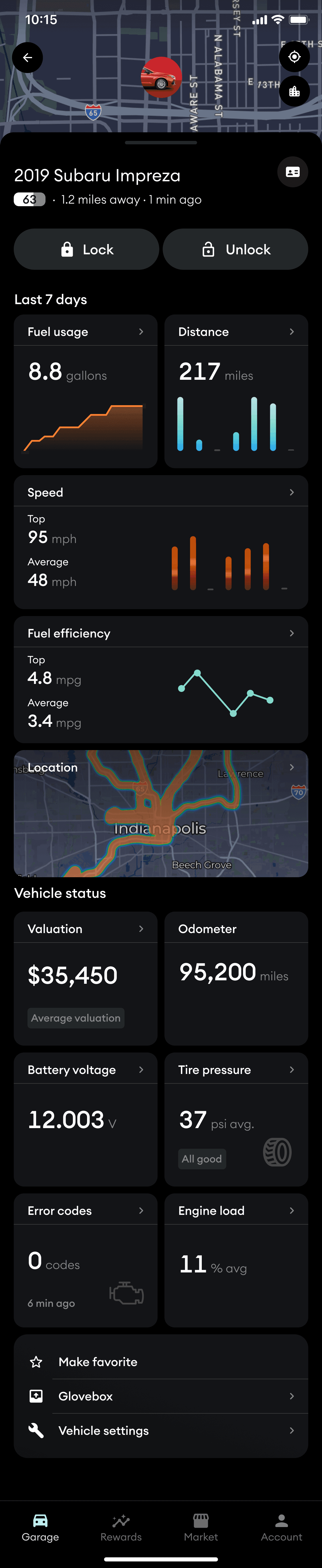
We expanded capabilities where needed, but the real opportunity was to activate the signals we already collected. The constraint was not data availability, but translation. Driving insights delivered every day, while demonstrating the depth of the DIMO protocol and creating contextual marketplace moments that are genuinely useful.
Audit
I audited how existing data was used. Error codes and metrics existed, but engagement was episodic. Charts were static and disconnected from user intent. The problem was not data volume, but interpretation.
before
before
before
before
before
before
before
before
before
before
before
before
before
before
before
before
before
before
before
before
before
before
before
before
before
before
before
before
before
before
before
before
before
before
before
before
before
before
before
before
before
before
before
before
before
before
before
before
before
before
before
before
before
before
before
before
before
before
before
before
before
before
before
before
before
before
before
before
before
before
before
before
before
before
before
before
before
before
before
before
before
before
before
before
before
before
before
before
before
before
before
before
before
before
before
before
before
before
before
before
before
before
before
before
before
before
before
before
before
before
before
before
before
before
before
before
before
before
before
before
before
before
before
before
before
before
before
before
before
before
before
before
before
before
before
before
before
before
before
before
before
before
before
before
before
before
before
before
before
before
before
before
before
before
before
before
before
before
before
before
before
before
before
before
before
before
before
before
before
before
before
before
before
before
before
before
before
before
before
before
before
before
before
before
before
before
before
before
before
before
before
before
before
before
before
before
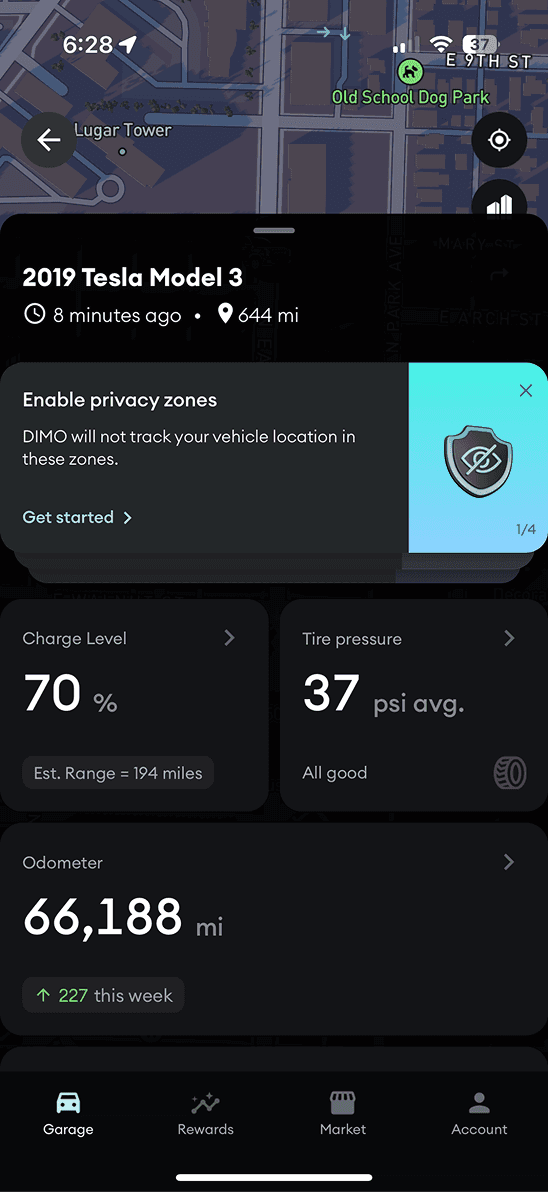
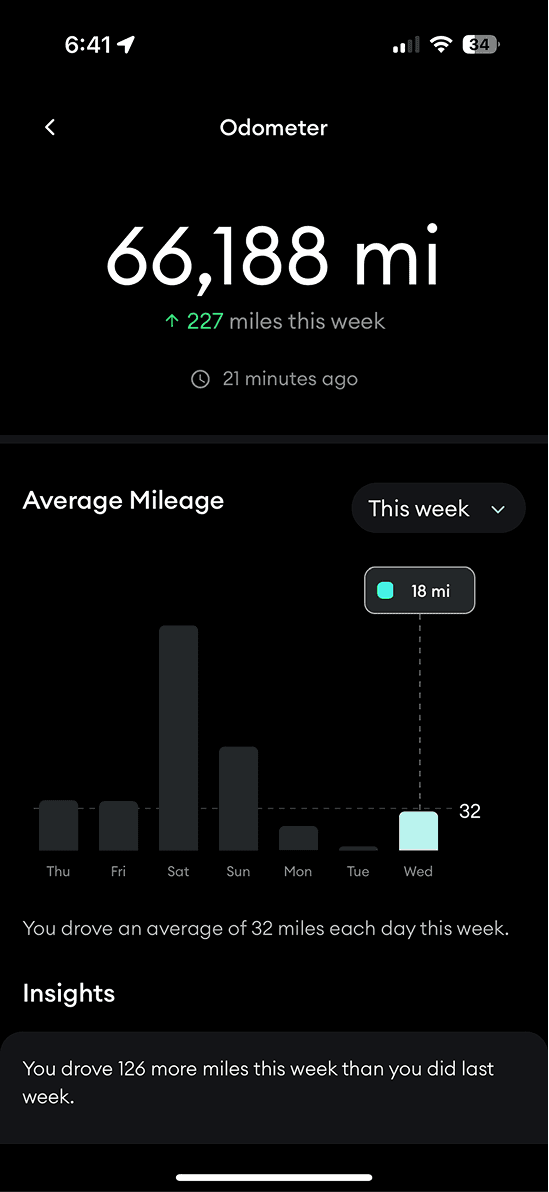
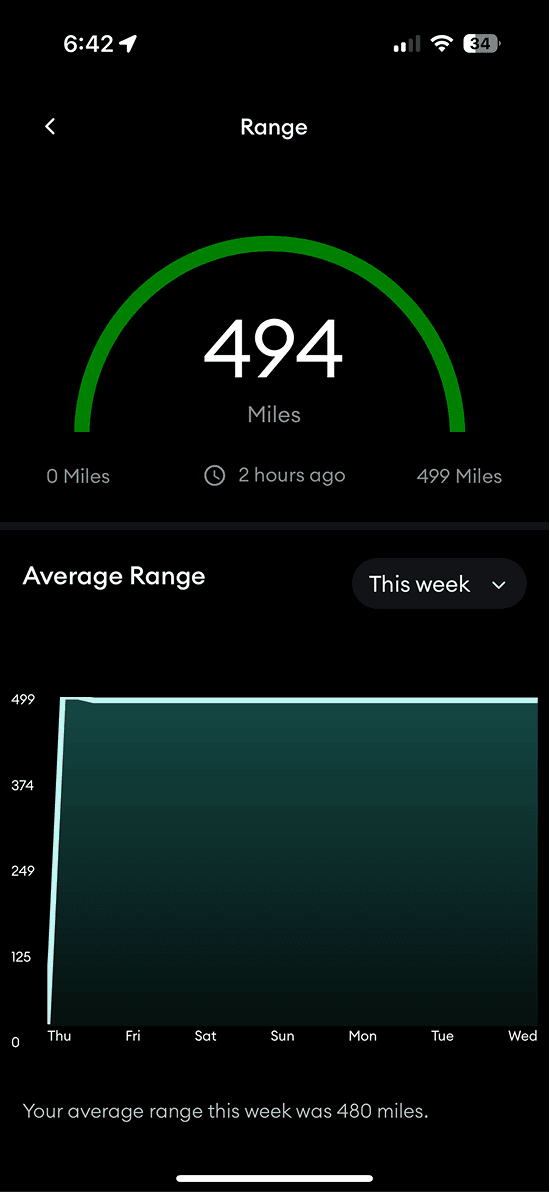
Because vehicle data varied by connection type, we prioritized signals available across most users: odometer, distance, speed, location, range, fuel, and charging. Consistency first. Depth later.
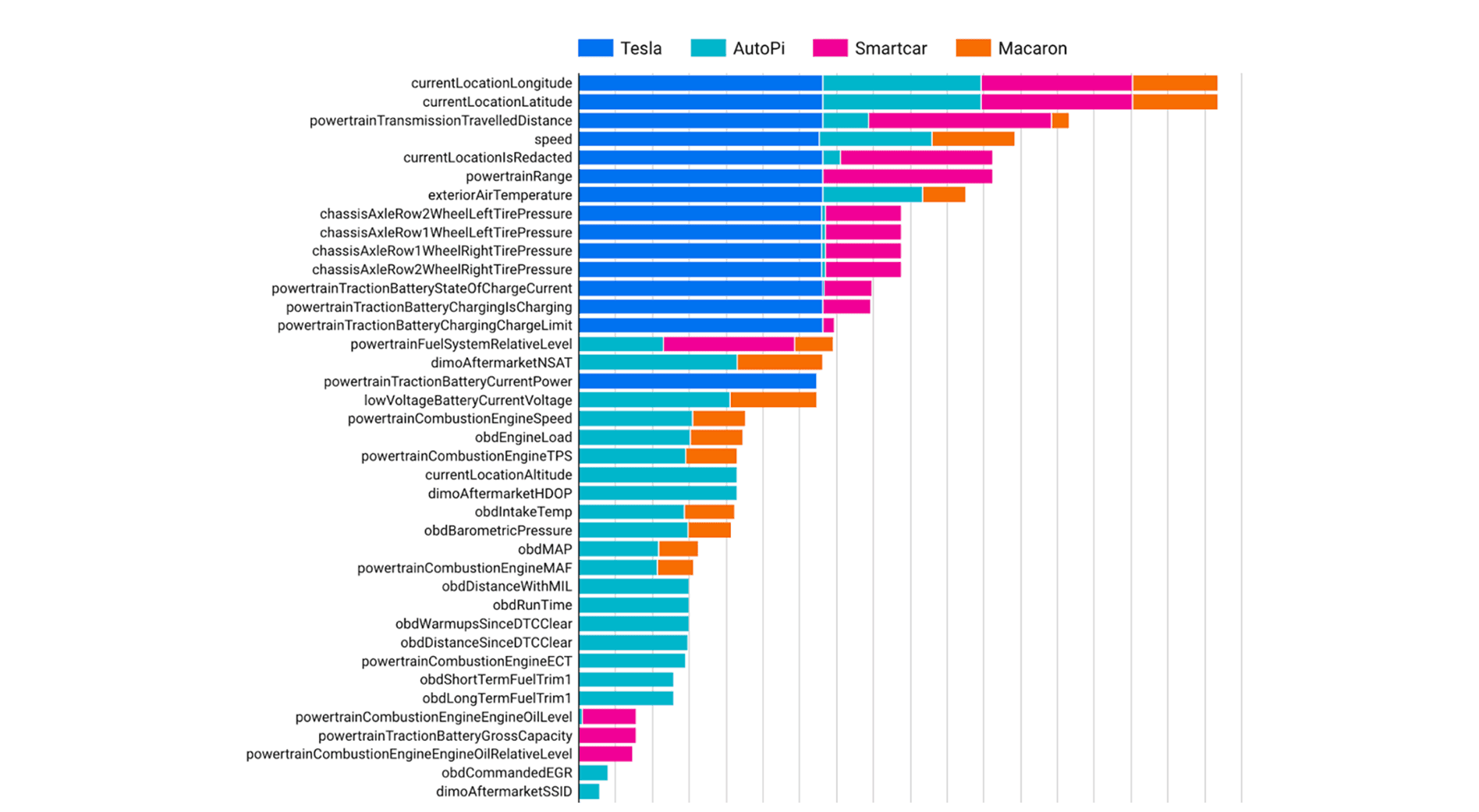
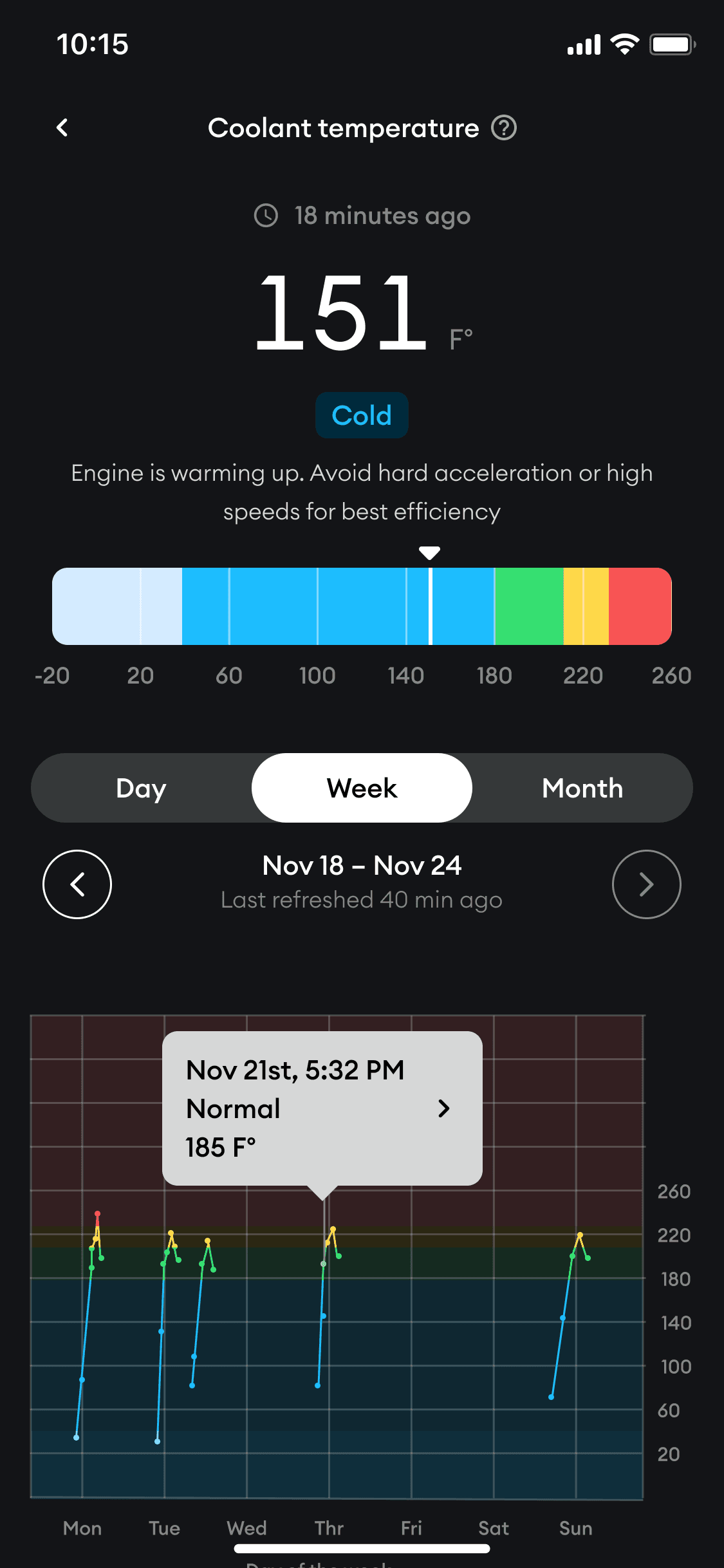
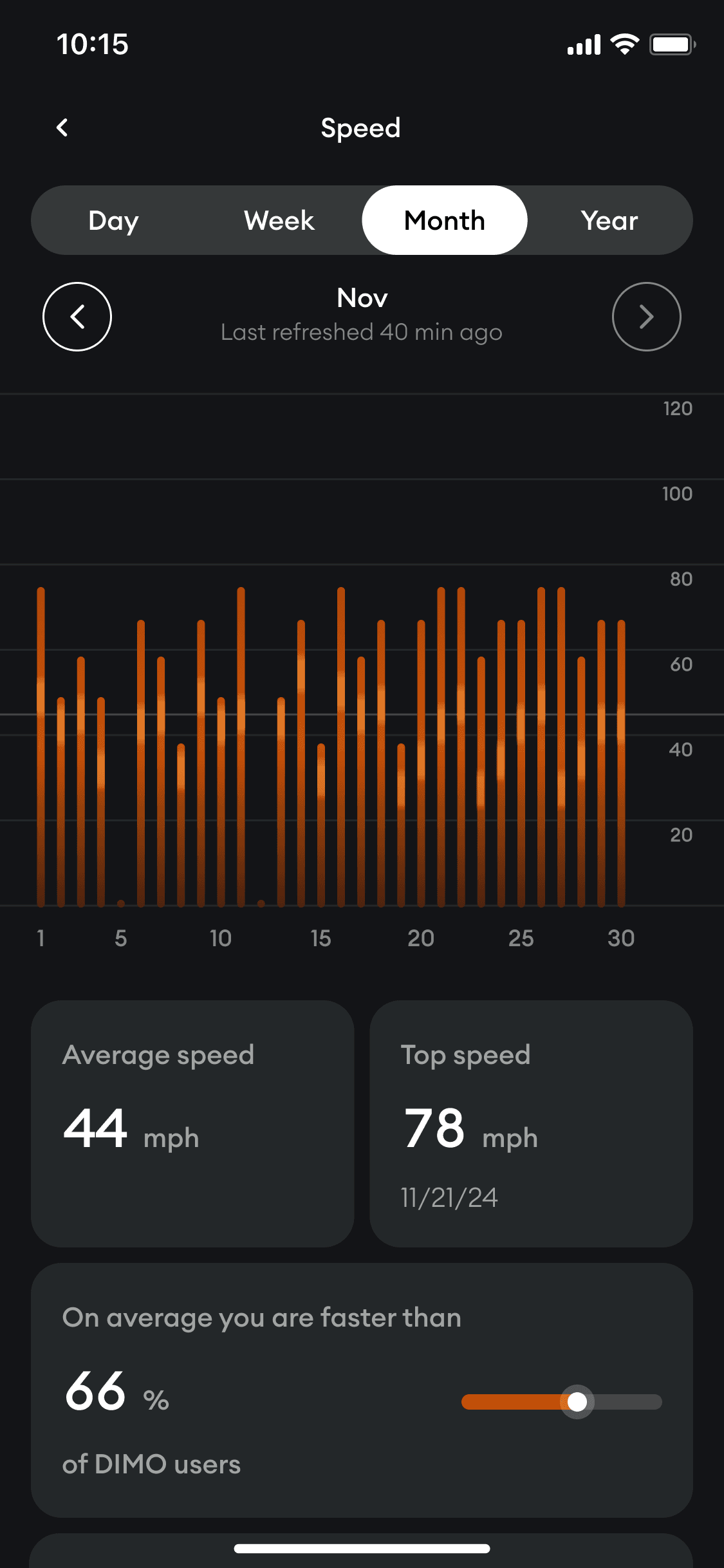
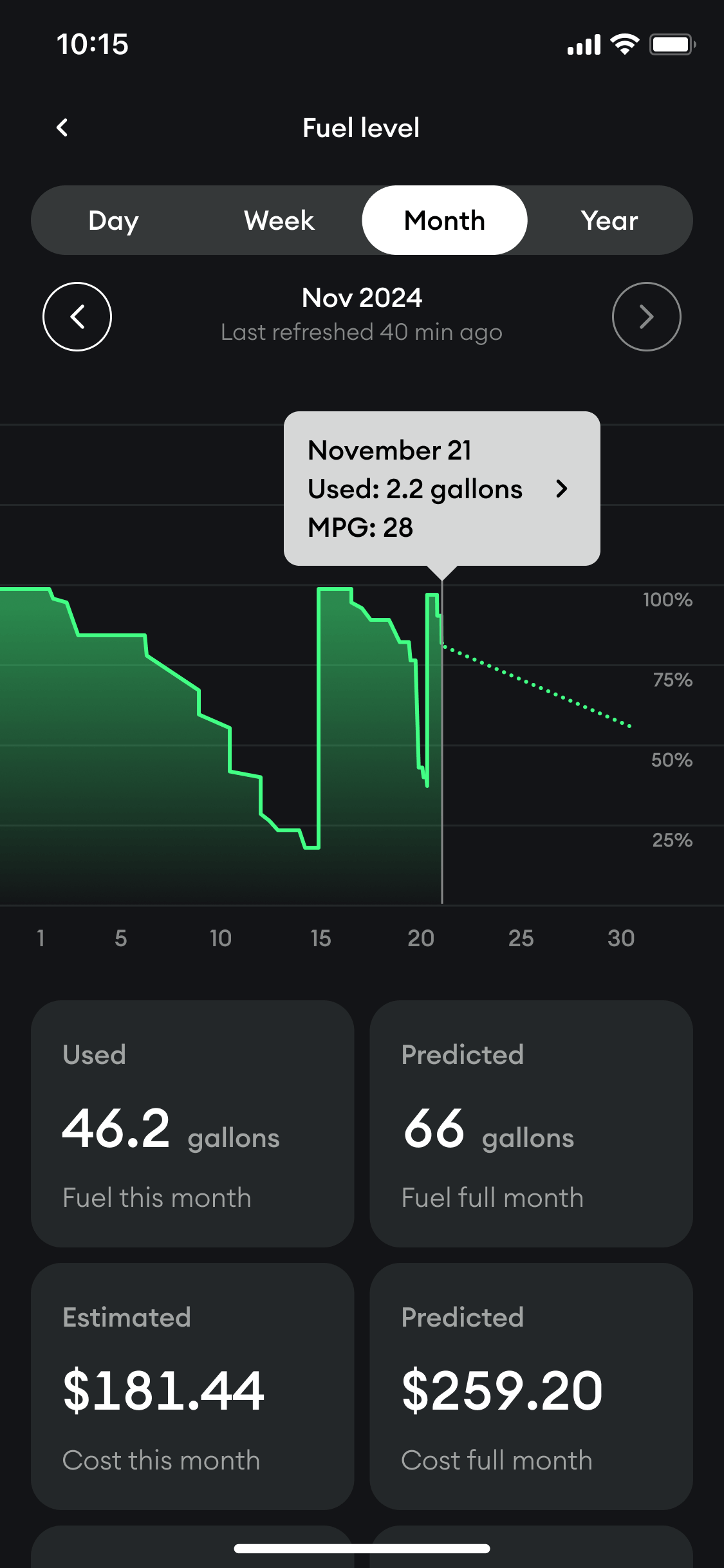
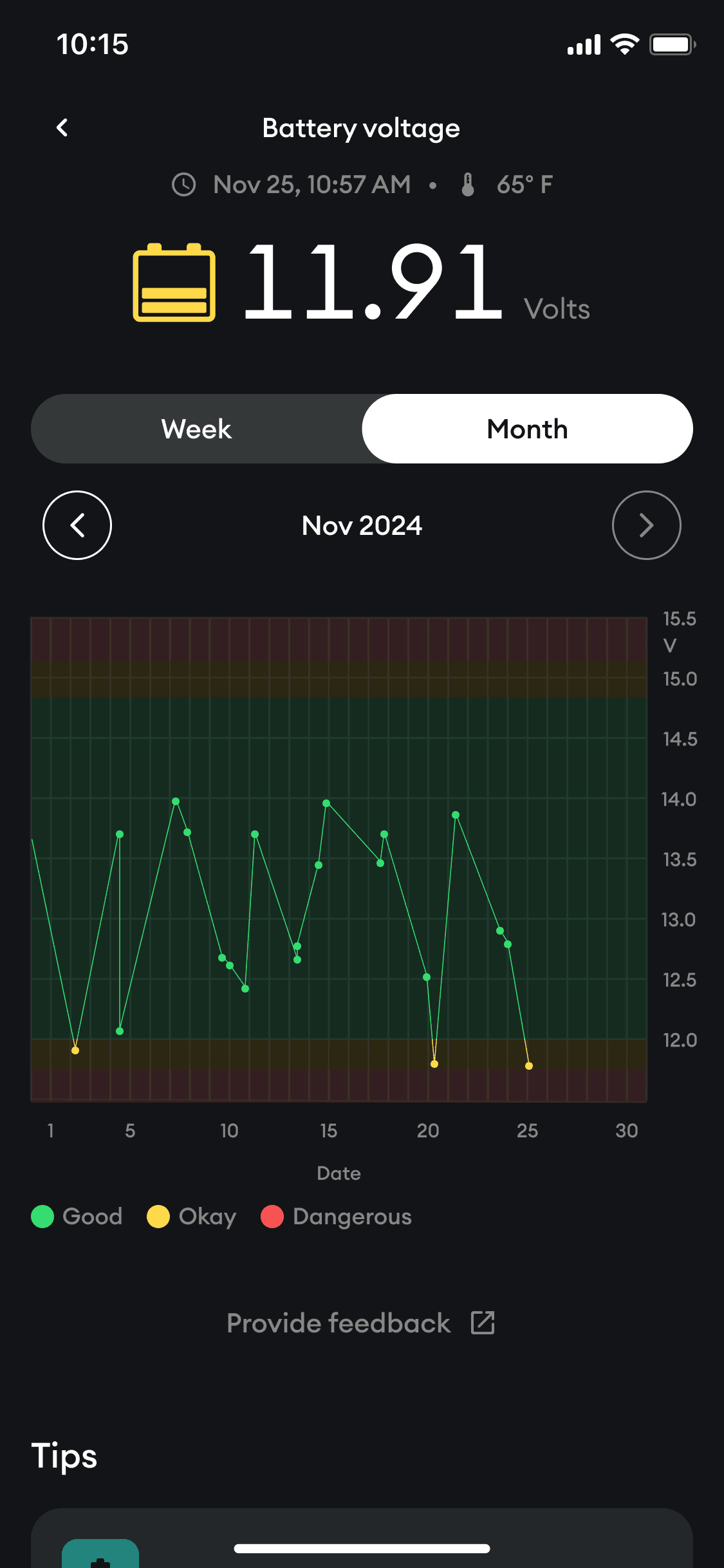
System logic
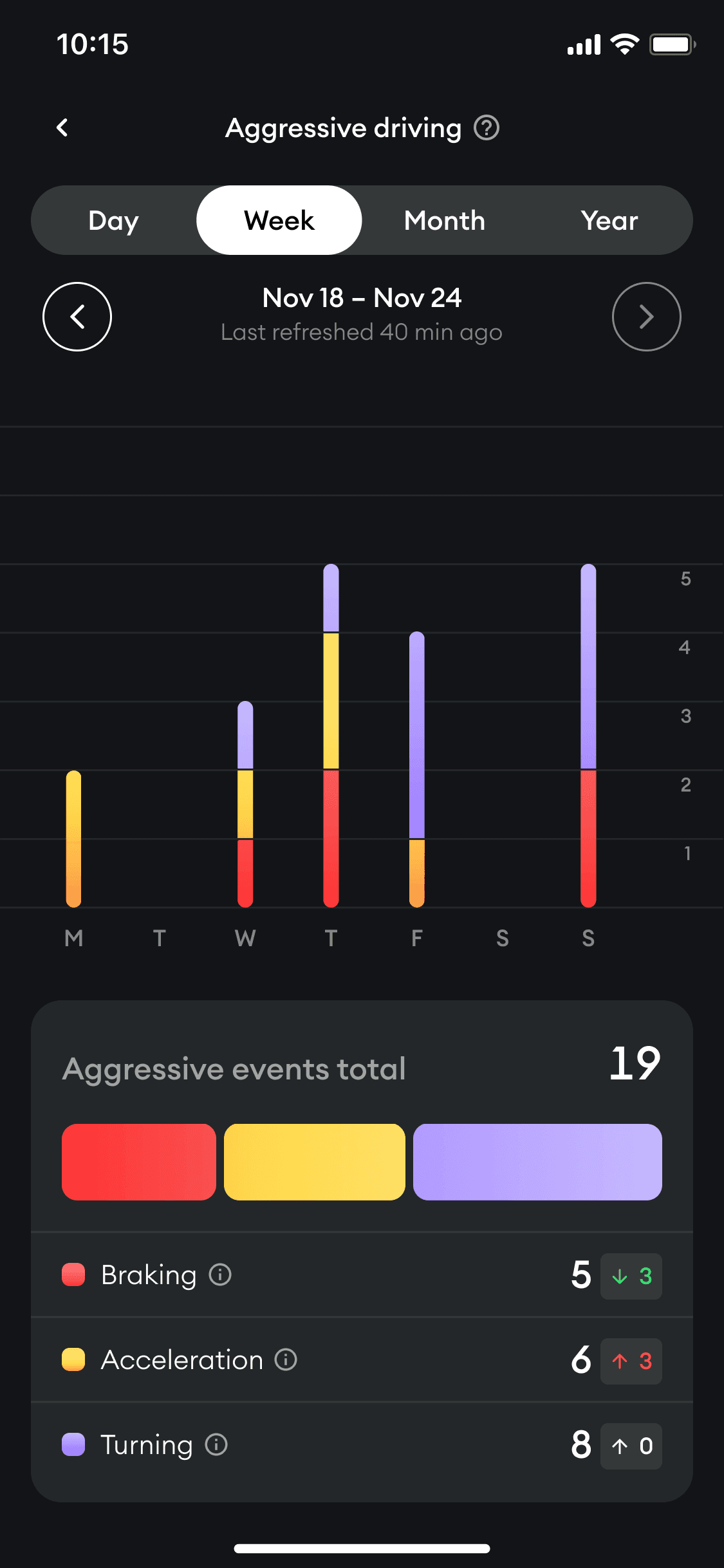
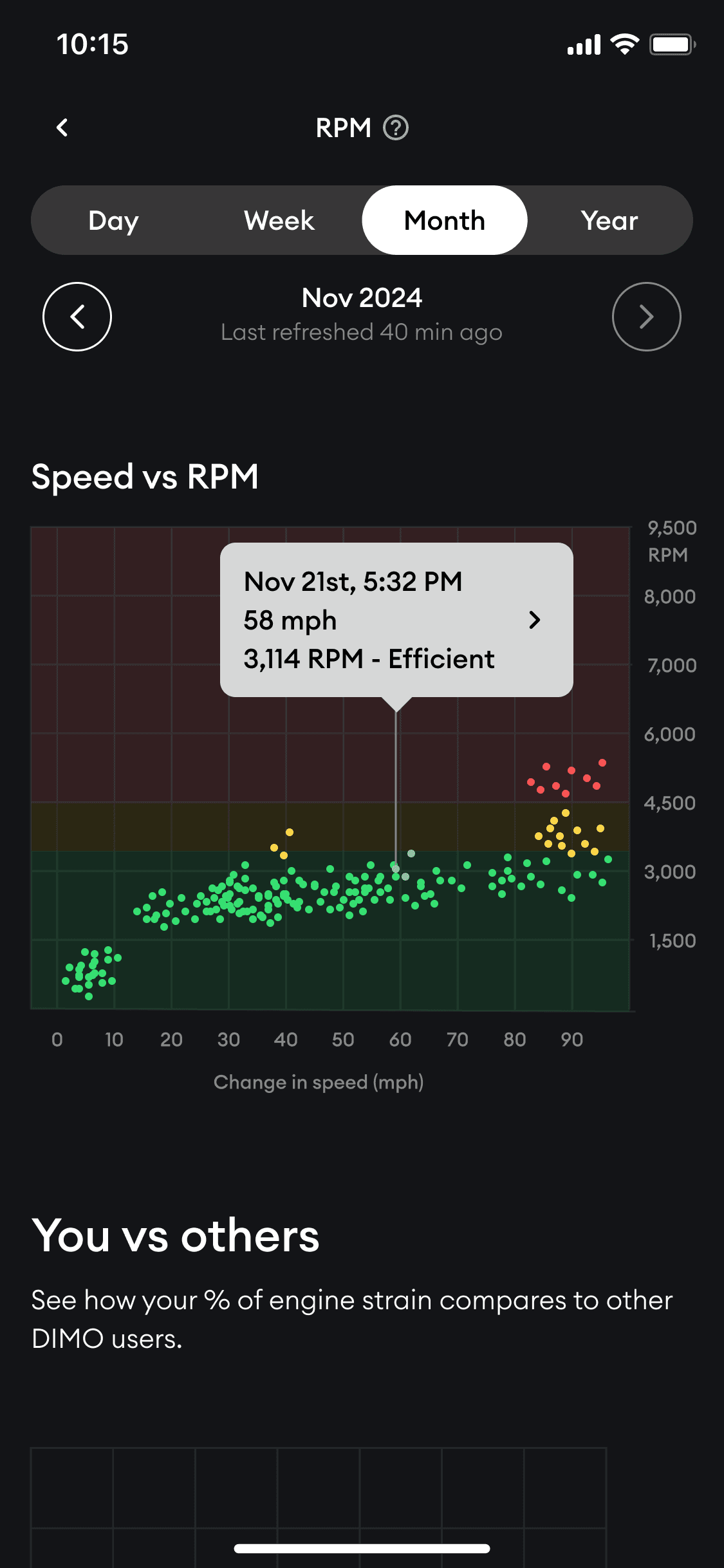
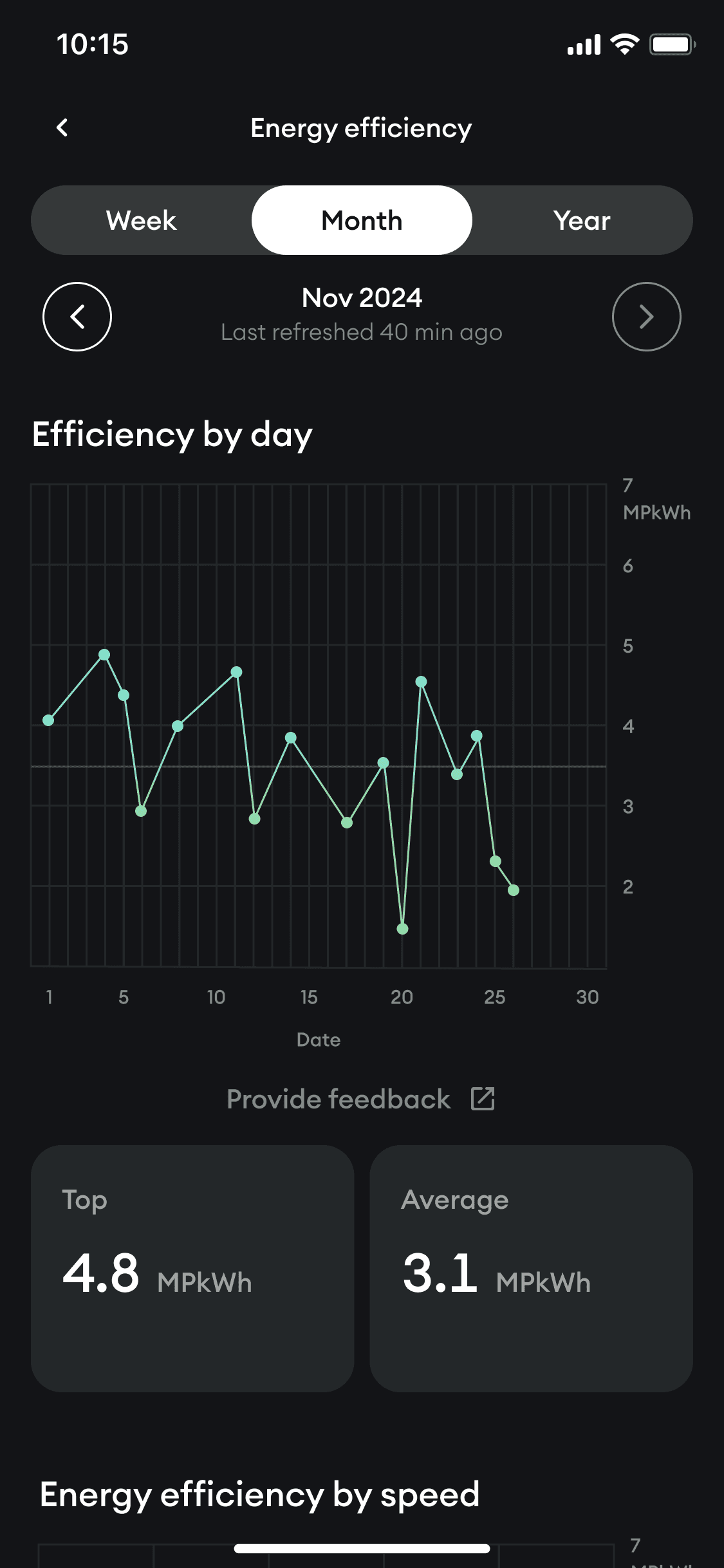
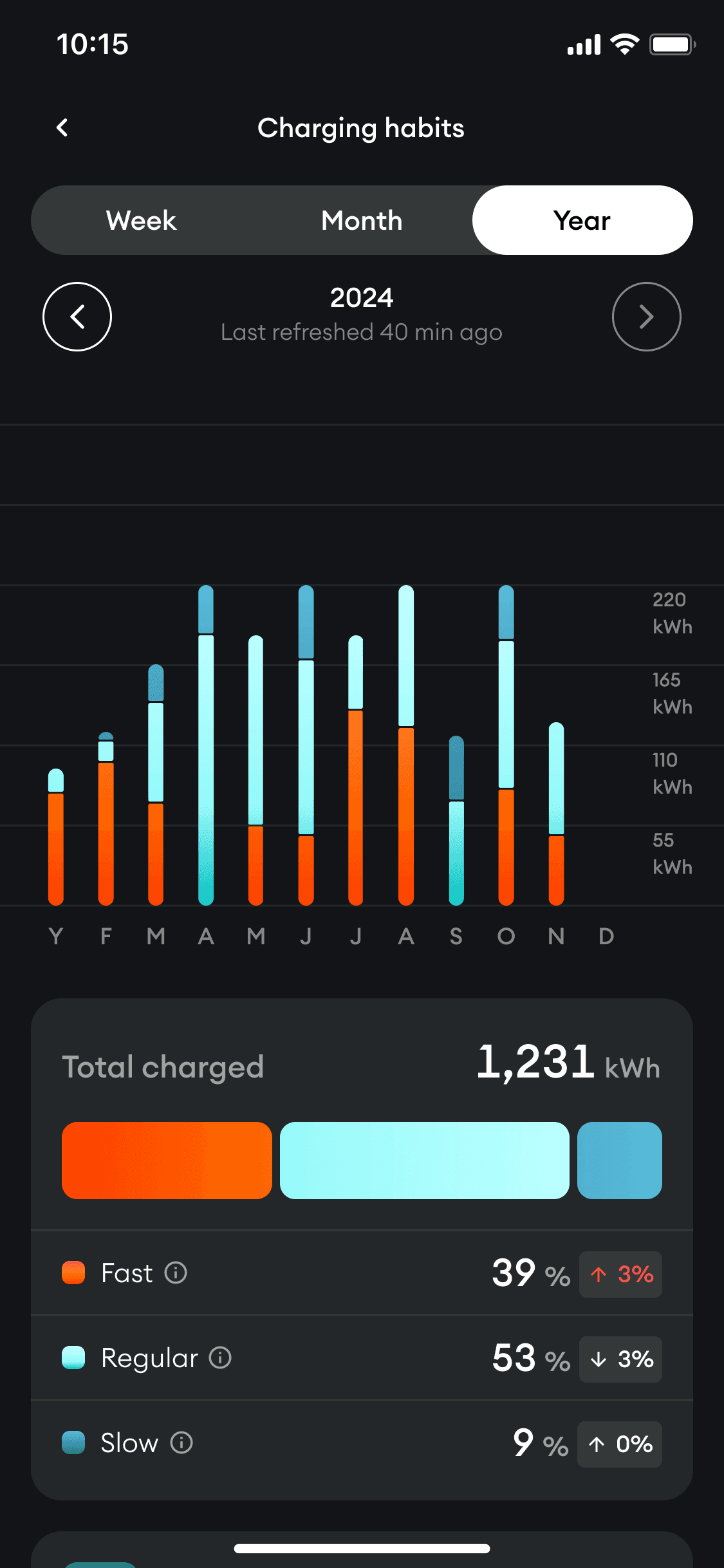
Rather than designing isolated dashboards, I defined a repeatable insight structure that could scale across modules. The framework reduced cognitive load for users and entropy for engineering.
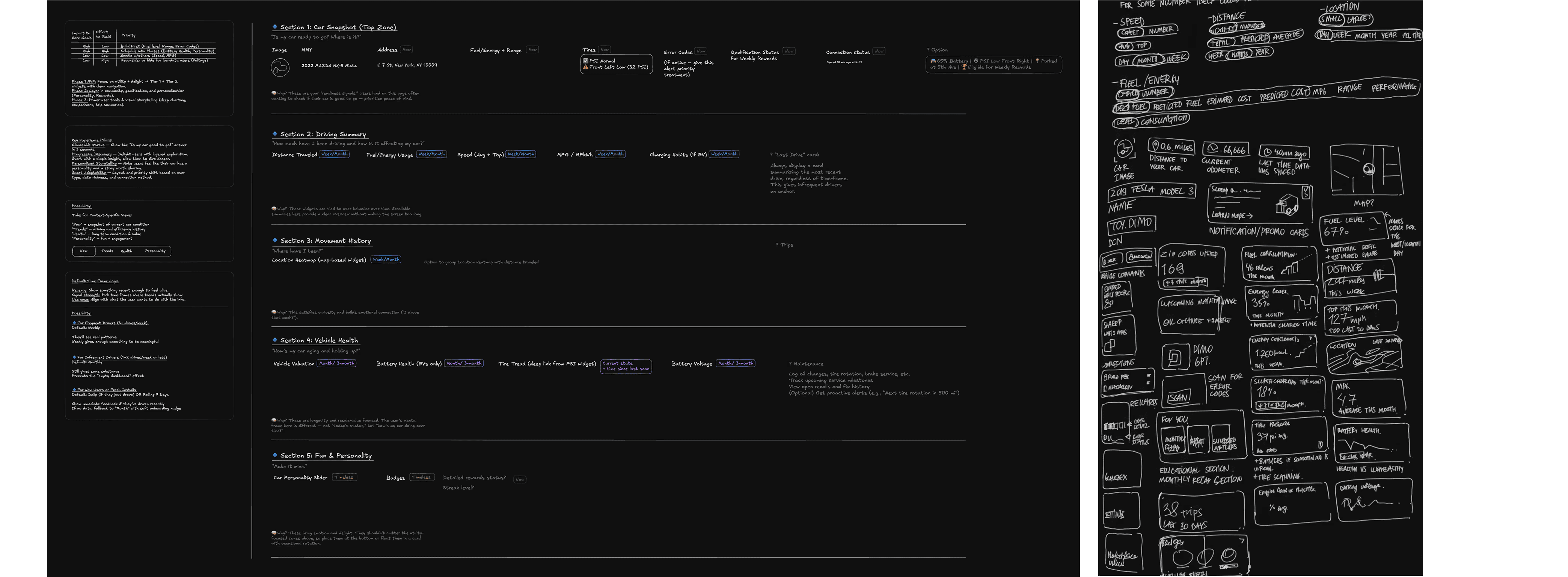
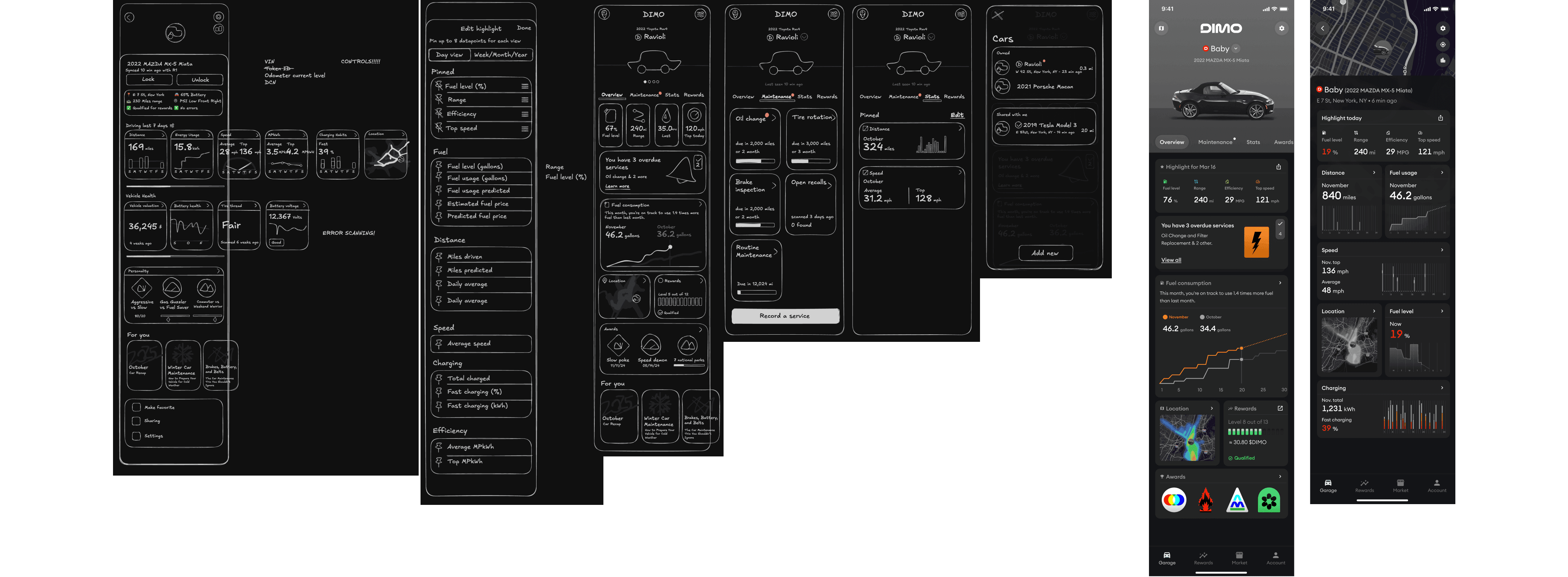
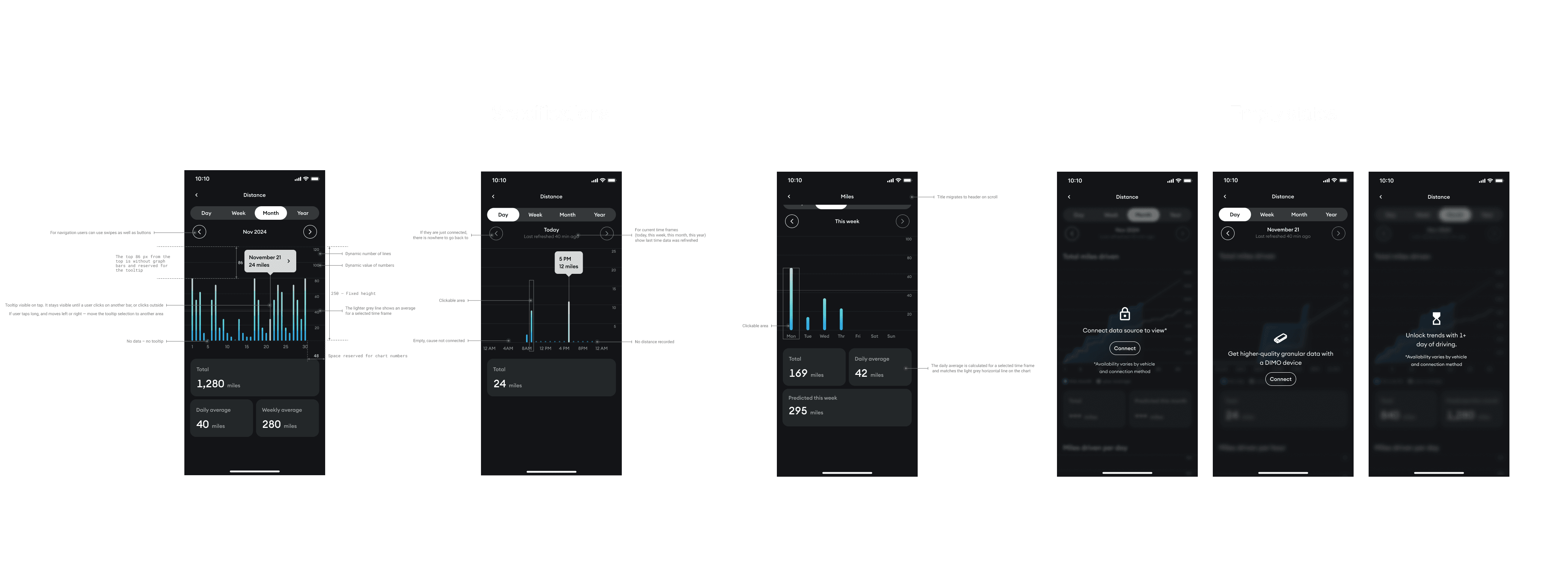
We translated telemetry into guidance: predicting fuel depletion, estimating annual fuel costs, highlighting the long-term impact of aggressive driving or frequent fast charging, and flagging unhealthy RPM or battery voltage ranges. Insights created understanding. The next step was turning that understanding into timely action.
Notifications and expansion strategy
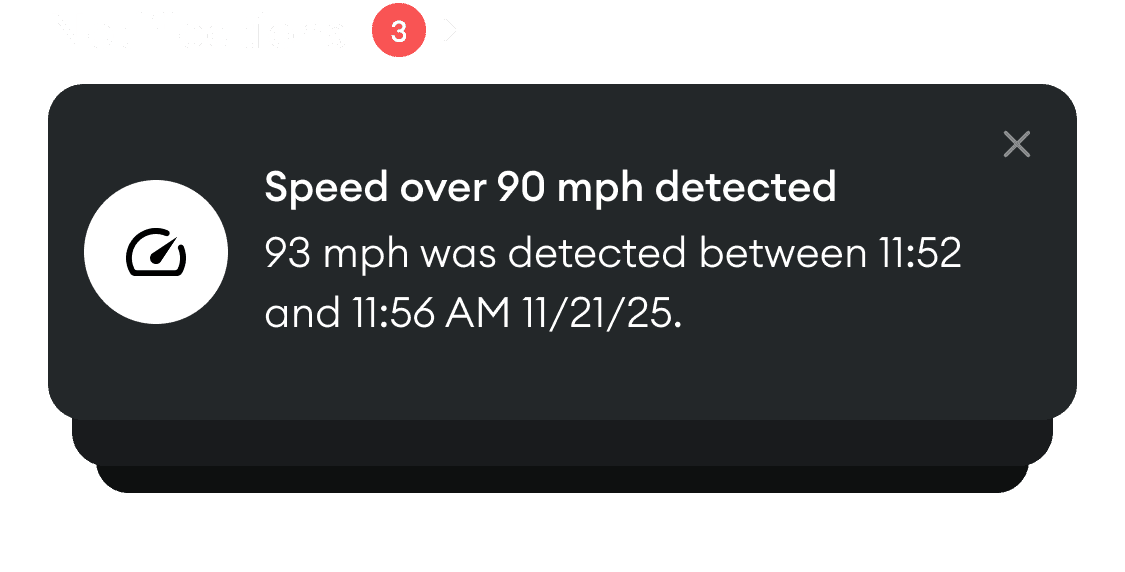
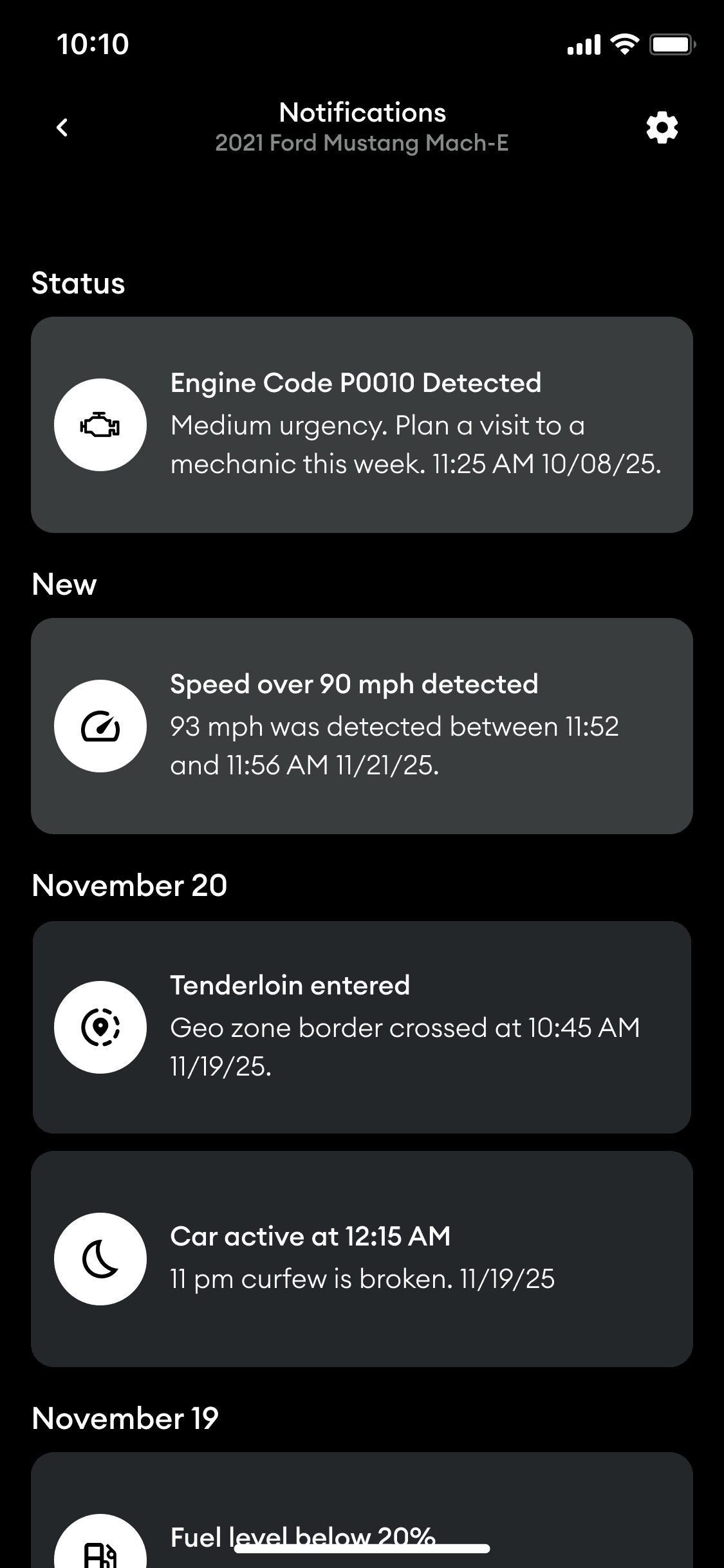
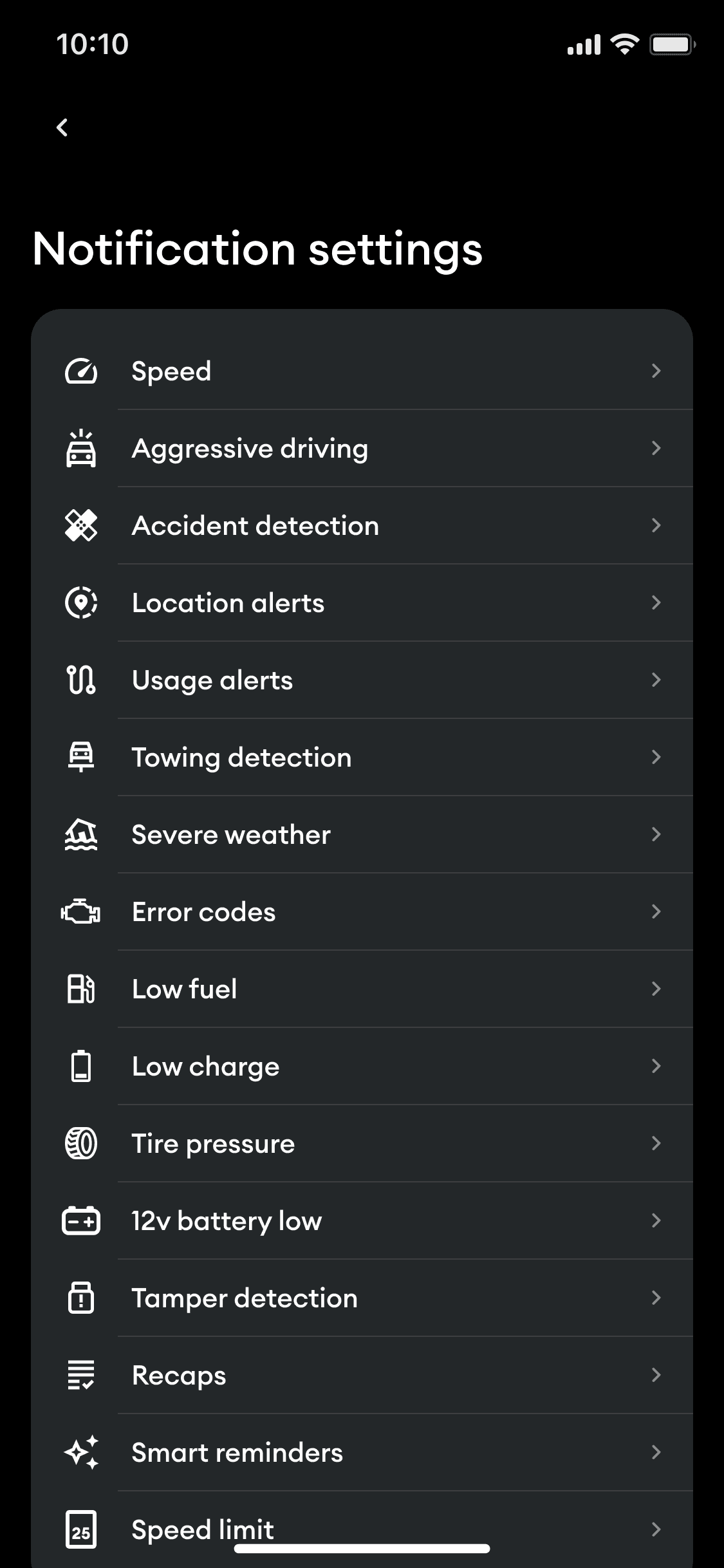
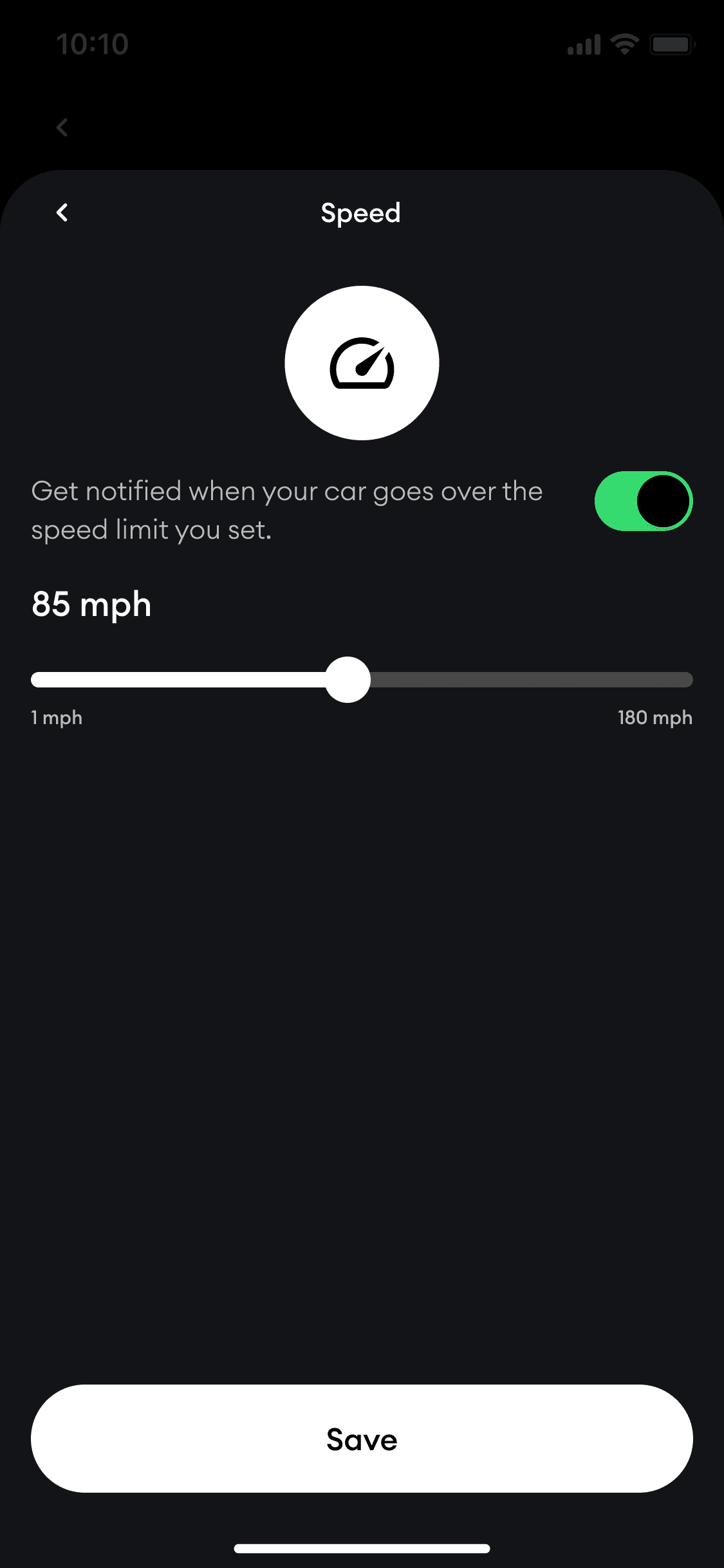
To strengthen habit formation and reinforce the overall value proposition, I designed and scoped a flexible alerts system built on top of these insights. Certain high-risk signals, such as critical error codes, were enabled by default to ensure safety and visibility. Other alerts, including aggressive driving events, charging behavior, or usage monitoring, were configurable, giving users control based on their needs. I conducted a competitive benchmark, including Bouncie, to understand expectations around driver monitoring and identified an opportunity to expand into segments such as parents of teenage drivers and small fleet owners. I brought this opportunity to the marketing team and led a prioritization workshop to determine which alerts to launch first, balancing technical feasibility with user appeal and growth potential.
Results
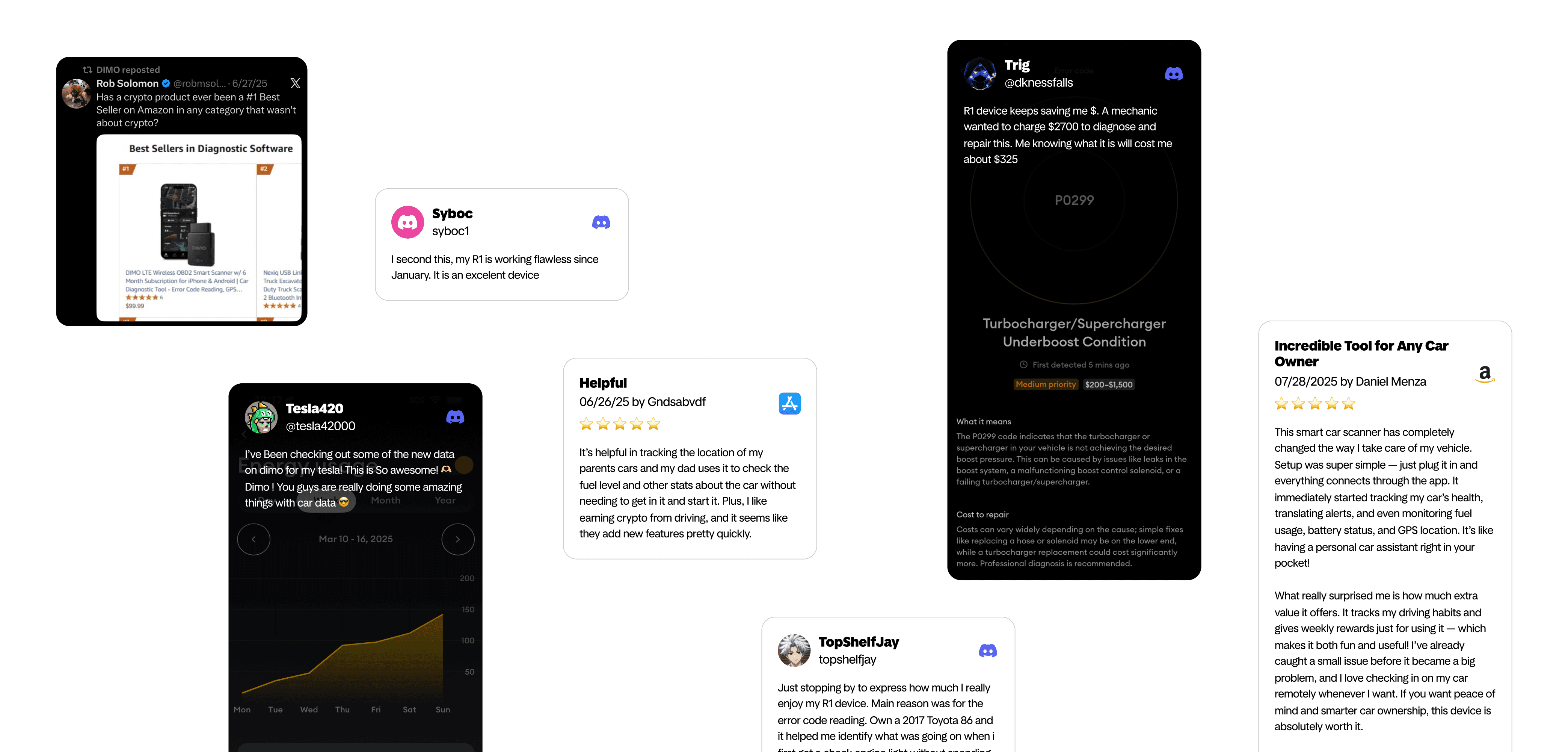
This behavioral repositioning produced measurable impact. Daily and weekly active usage doubled. Users on the newest R1 device benefited most from the richer data layer, with 31% opening the app daily. Positive reviews from R1 users on social platforms reinforced the value of deeper insights and created a credible reason for drivers on older devices to upgrade. Notably, token rewards remained unchanged, but the product experience improved significantly. Engagement within the Garage tab increased and R1 device sales accelerated to Amazon best-seller status in its category.
Garage PMF increased from 37% to 72%
5x more clicks on the garage tab
Over 30K of R1 devices sold becoming best-seller in diagnostic software on Amazon
31% of R1 users opened the app daily
2x the number of daily & weekly active users
Reflection
This transformation reinforced a core principle: incentive-driven growth is fragile, utility-driven growth compounds.
Durable engagement comes from helping users make better decisions. Infrastructure sets product ceilings. Abstraction must reduce friction without erasing trust. Systems thinking enables scale.
By aligning identity architecture, insight design, and behavioral triggers, we repositioned DIMO from a token-adjacent utility to a credible daily driver platform, expanding its audience without abandoning decentralization.
Credits
Product Lead — Henry Hirshland
Creative Director — Courtney Cann